

I never told my family that I earn a million dollars a year. In their eyes, I was still the daughter who dropped out of college—the disappointment forever living in the shadow of my flawless older sister. And when my daughter lay unconscious in the ICU after a devastating accident, clinging to life, not one of them came.
I stayed silent… until my mother called to warn me that if I missed my sister’s party the next day, I would be cut off from the family. Before I could even respond, my sister grabbed the phone, screaming that I should stop using my child as an excuse—then abruptly hung up.
That was the moment they went too far.
I decided I would attend the party.
And they would regret forcing me to come.
To my family, I was still Olivia Carter—the college dropout who never lived up to expectations. My older sister, Victoria, was everything I wasn’t. Ivy League graduate. Married into a “good” family. Polished, admired, flawless. In my parents’ eyes, she could do no wrong. I, on the other hand, was the failure they tolerated but never respected.
What they never bothered to learn was the truth.
After leaving school, I built a logistics consulting business from scratch, working off my laptop while raising my daughter, Lily, on my own. I worked late nights, took terrifying risks, failed countless times—and eventually succeeded. Very well. But I never shared any of it. My family never asked how I paid my bills, and I never felt the need to explain myself.
Three weeks ago, my world shattered.
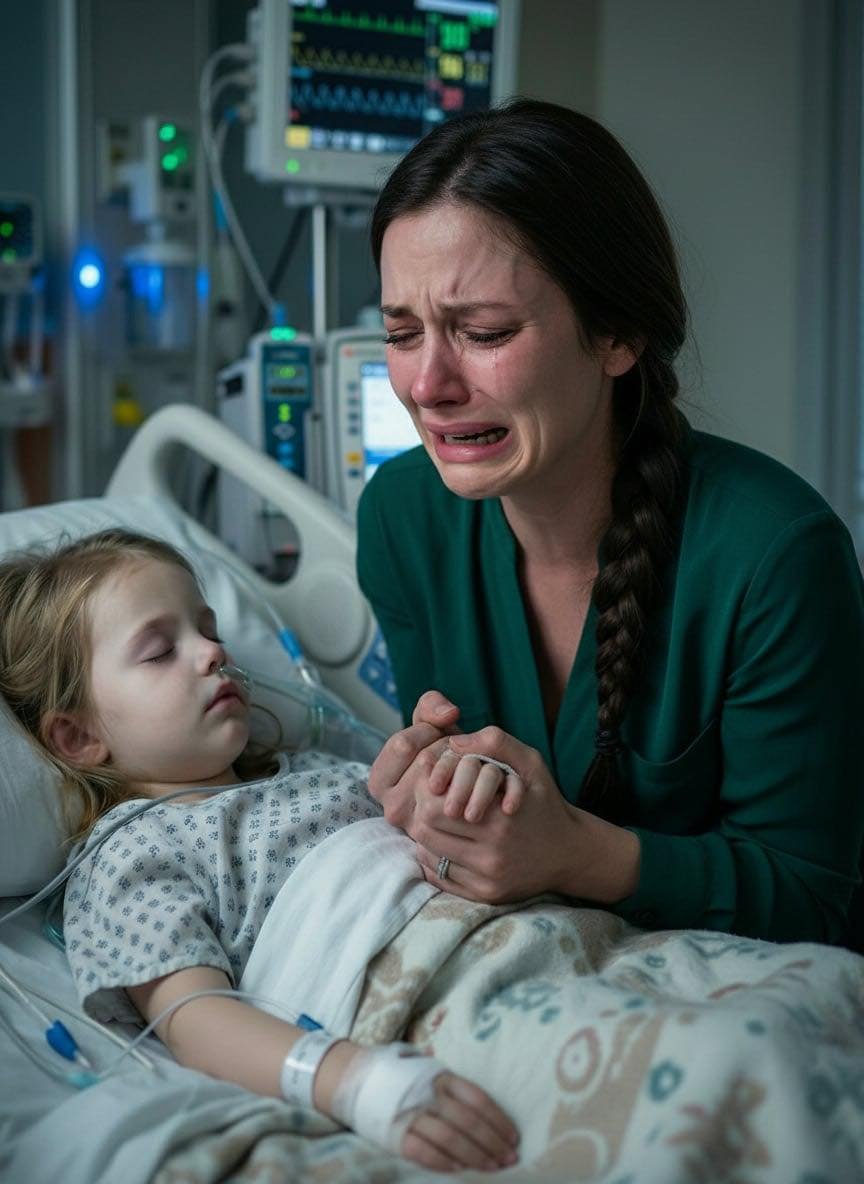
Lily was hit by a speeding car while crossing the street after school. The doctors said she was “lucky” to survive—if lying unconscious in the ICU, hooked up to machines that breathed for her, could be called lucky. I slept upright in a plastic chair beside her bed, surviving on vending machine coffee and relentless fear.
At first, I didn’t call my family. But when doctors told me the next 48 hours would determine whether she lived, I swallowed my pride and reached out.
My mother answered with irritation, not concern.
“Why are you calling during dinner?” she asked.
My voice shook as I told her Lily was in intensive care. There was a pause. Then a sigh.
“That’s unfortunate,” she said. “But we’re very busy this week. Your sister’s party is coming up.”
Not one of them came. Not my parents. Not Victoria. No messages. No flowers. Nothing.
I focused on my daughter—until my mother called again.
“Your sister’s party is tomorrow,” she said flatly. “If you don’t show up, you’re no longer part of this family.”
I was stunned. I tried to explain—again—that Lily was still unconscious. That I couldn’t leave her side. That she might not survive.
Before I could finish, Victoria took the phone.
“Stop hiding behind your kid!” she shouted. “You always make excuses. Everything has to be about you. If you actually cared about this family, you’d show up for once.”
Then the line went dead.
I stood there staring at my phone, my hands shaking—not with fear anymore, but with something colder.
That was the moment I stopped trying to be understood.
The following evening, I walked into my parents’ house wearing a simple black dress, my expression calm, every emotion locked tightly inside. The house buzzed with laughter and celebration. Victoria stood at the center of it all, radiant and soaking up the attention.
When she saw me, her smile tightened.
“Well, look who showed up,” she said loudly. “I figured you’d come up with another excuse.”
I didn’t respond. I handed my mother a gift bag. She barely glanced at it.
“You could’ve dressed better,” she muttered. “People might think you’re struggling.”
“I’m fine,” I replied quietly. “Really.”
The night dragged on with subtle jabs masked as jokes. Victoria bragged about her husband’s career, her new car, her upcoming vacation. Eventually, she raised her glass.
“I’m grateful I never quit when things got hard,” she announced. “Some people take shortcuts and still get nowhere.”
Laughter rippled through the room. Several people glanced at me.
Then my phone rang.
The room fell quiet as I answered. “This is Olivia.”
The doctor’s voice was firm—and loud enough for those nearby to hear.
“Ms. Carter, your daughter’s condition has stabilized. She’s breathing on her own. She woke up and is asking for you.”
Relief hit me so hard I had to close my eyes. “Thank you,” I whispered.
Victoria scoffed. “There you go again—making everything about you.”
I turned to face her.
“No,” I said calmly. “That was Lily’s ICU doctor—the one none of you ever came to see.”
Whispers spread through the room.
Before anyone could react, a man in a tailored suit approached me. “Ms. Carter,” he said, “I didn’t realize you were Victoria’s sister. I’m Daniel Wright. Our firm has been trying to reach you about an acquisition.”
My father stiffened. “Acquisition?”
Daniel nodded. “Your company is impressive—seven figures annually and growing fast. We’re very interested.”
Silence fell.
My mother stared at me. “What does he mean?”
I met her gaze. “I make a million dollars a year. I always have. I just never thought it mattered enough for you to ask.”
Victoria’s face went pale.
“And while my daughter was fighting for her life,” I continued evenly, “you threatened to disown me because I missed a party.”
I picked up my coat.
“This family made its choice a long time ago.”
Then I walked out.
I didn’t look back. For the first time in years, the air felt light.
When I returned to the hospital, Lily was awake—weak, exhausted, but smiling. She squeezed my hand and whispered, “Mom.”
Nothing else mattered.
In the days that followed, my phone filled with messages—apologies, excuses, pleas to “talk it out.” I didn’t respond. Not out of anger, but clarity.
Silence had protected them, not me. Speaking the truth didn’t make me cruel. Setting boundaries didn’t make me heartless. Walking away didn’t mean I lost a family—it meant I stopped begging for love from people unwilling to give it.
Lily recovered slowly. I adjusted my work, spent every spare moment with her, and taught her what real love looks like—steady, unconditional, present.
One afternoon, she asked, “Mom… are we still a family?”
I smiled and pulled her close. “Yes,” I said. “The right kind.”
Success isn’t just money or titles.
Sometimes, it’s the courage to stand up, tell the truth, and walk away when respect is no longer there.


