

Nine-year-old Emily Warren sat trembling in the backseat of her mother’s SUV, her fingers digging into the fabric of her jacket. When Linda glanced back, she froze—Emily’s cheeks were streaked with silent, shaking tears, the kind that didn’t belong to scraped knees or childish fears.
“Sweetheart?” Linda said carefully. “What happened?”
Emily’s breath hitched. She wiped her face, then whispered, “He promised he wouldn’t hurt me.”
The words cut through Linda like ice. She pulled the car to the curb, turned in her seat, and took her daughter’s trembling hands.
“Who said that to you, Emily?”
Emily’s gaze sank to the floor. “Mr. Cole… the neighbor. He said his cat was missing. He asked me to help him look in the basement.”
A chill shot through Linda. Thomas Cole—quiet, polite, forty-something—had lived two houses down for years. He was the type who waved from his porch and never caused trouble.
But now Emily was shaking violently, and faint red marks circled her wrists.
Minutes later, Linda was racing toward St. Margaret’s Hospital, gripping the wheel so tightly her knuckles whitened. Behind her, Emily cried through fragmented memories—“basement,” “rope,” “I screamed once.”
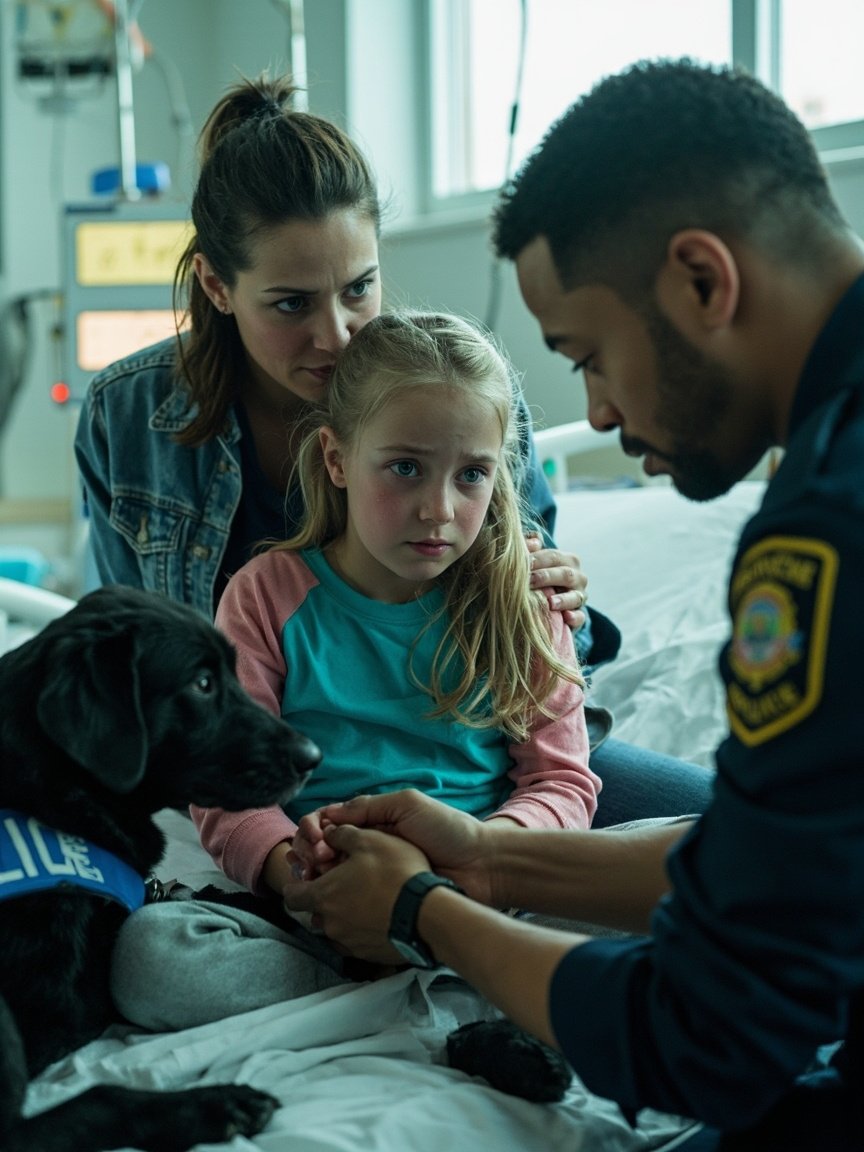
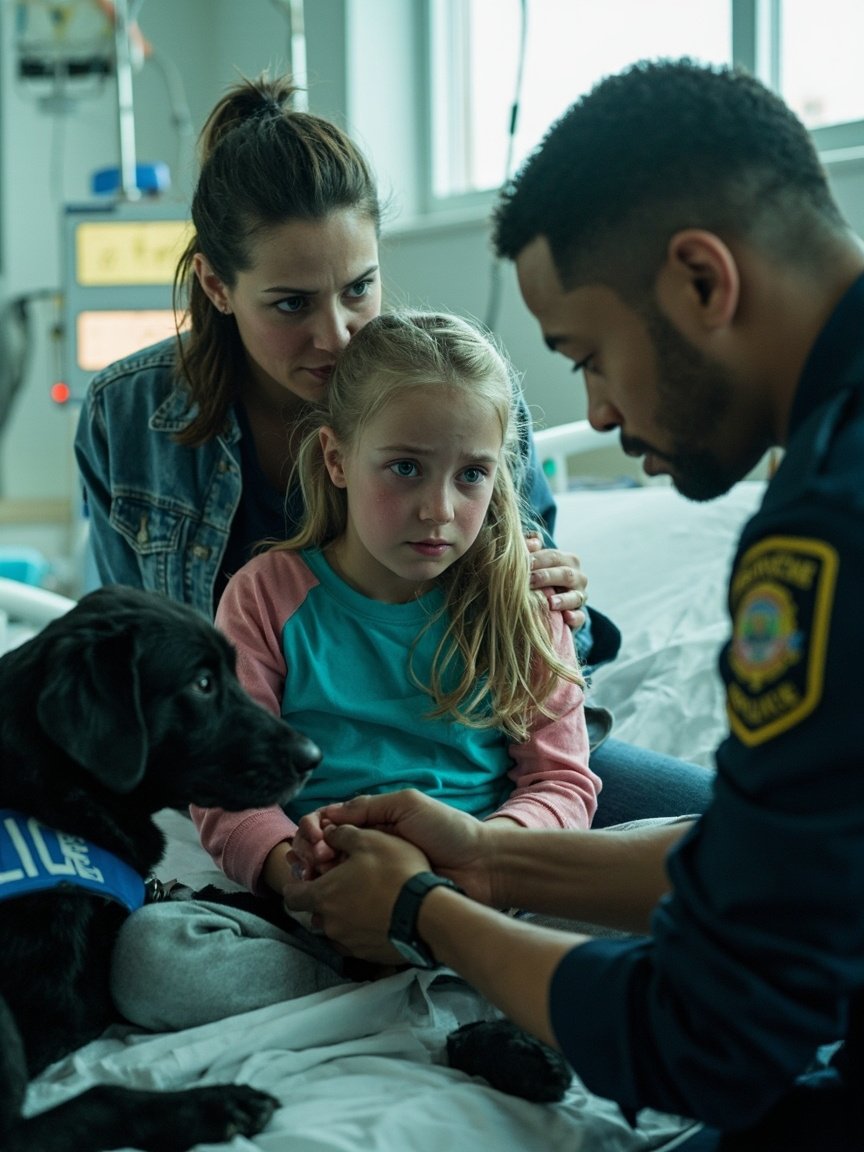
At the hospital, staff ushered Emily into an exam room while Linda choked out what happened. A social worker and two detectives from the Crimes Against Children Unit arrived soon after. Emily’s account—halting, tearful, but steady—painted a horrifying picture: Mr. Cole had lured her inside, locked the door, tried to bind her wrists, and whispered that she “wouldn’t get hurt if she stayed quiet.”
When a detective gently asked if anyone else was in the house, Emily’s voice dropped to a fragile whisper: “I heard someone crying… like another kid.”
Everything shifted.
Officers rushed to Cole’s home. He wasn’t there—and his house was disturbingly neat, scrubbed clean of anything that looked like real life.
That’s when the K-9 unit arrived.
Ruger, a trained German shepherd, moved through the house with practiced precision. As soon as he entered the basement, his demeanor changed—ears up, muscles taut. He lunged toward a locked storage room, barking relentlessly.
Officers broke down the door.
Inside, the truth began to surface—far darker than anyone imagined.
The room smelled of bleach and damp concrete. Ruger growled as officers swept their flashlights across the cramped space. Two pairs of children’s sneakers sat neatly beside a cot. On the floor, Detective Maria Delgado pointed to faint drag marks.
“Something—or someone—was moved recently.”
They found rope fibers. A roll of duct tape. A notebook filled with dates and initials. The latest entry read: “E.W.”
“He planned this,” Delgado muttered.
Neighbors gathered outside, confused and horrified. Thomas Cole had always seemed ordinary—helpful, quiet, invisible. No one had ever questioned him.
Back at the hospital, Emily spoke more clearly to a forensic interviewer. Cole had coaxed her downstairs, grabbed her arm, tied her hands. She escaped only because he stepped away to answer a phone call.
By the time police arrived, Cole had fled. His silver Honda Civic was missing. His phone was off. A BOLO went out immediately.
Near midnight, officers found surveillance footage from a gas station thirty minutes away. Cole bought fuel and a prepaid phone. Alone. Calm. Too calm.
At home, Linda sat wrapped in a blanket, terrified. “Could he come back?”
“We’re protecting your family,” an officer said gently. “Your daughter is incredibly brave. Her escape changes everything.”
But one question hung over every conversation: Where was the other crying child? And how long had Cole been doing this?
By dawn, Ruger alerted again—this time behind Cole’s shed. A forensic team unearthed a plastic container filled with children’s clothes, a bracelet, and a prepaid phone with saved voicemails.
Cole’s voice—soft, chilling—filled the room:
“Don’t cry. I’ll be back soon.”
“You’re my little secret.”
The final message was rushed, panicked:
“She escaped. I have to move you.”
Someone out there was still alive.
A nationwide alert went out. Cole’s face spread across news stations and billboards: Wanted for Child Abduction — Armed and Dangerous.
At noon, a Wyoming state trooper reported a silver Honda near an abandoned rest stop. Officers found footprints leading into the hills—two sets. One small.
Search teams launched drones and tracking dogs. Ruger picked up the scent later that afternoon, leading them into a narrow ravine. From inside a neglected storm shelter came a faint, heartbreaking sound: crying.
They found an eight-year-old boy, dehydrated but alive.
“My name is Aiden Miller,” he whispered as Detective Delgado wrapped him in a blanket. “He said he was taking me somewhere new. He said nobody would find me.”
Aiden’s account matched Emily’s: the calm voice, the sudden violence, the ropes.
Cole had vanished again.
A helicopter spotted him miles away. When ground units closed in, Cole didn’t resist. He lifted his hands slowly, his expression vacant.
“Did you hurt Emily?” Delgado demanded.
Cole blinked. “She wasn’t supposed to scream.”
His later statements spiraled into unsettling ramblings—claims that he “never meant harm,” that he wanted “children who listened.” Investigators uncovered months of stalking, online conversations, and rehearsed plans.
Emily and Aiden were the lucky ones.
Back at the hospital, Emily finally slept, her hand clutched in her mother’s. Aiden’s parents arrived hours later, collapsing into sobs as they held their son.
Two families, forever connected by fear—and survival.
Cole was charged with kidnapping, unlawful restraint, attempted assault, and more as evidence piled up.
Emily and Aiden began the long, fragile process of healing. Their resilience stunned even the professionals guiding them through recovery.
As for Ruger—the police dog whose instincts cracked open the entire case—he received a medal of bravery.
Two children saved. A predator stopped.
And a community forced to confront the terrifying truth:
Sometimes, the most dangerous monsters look ordinary.


